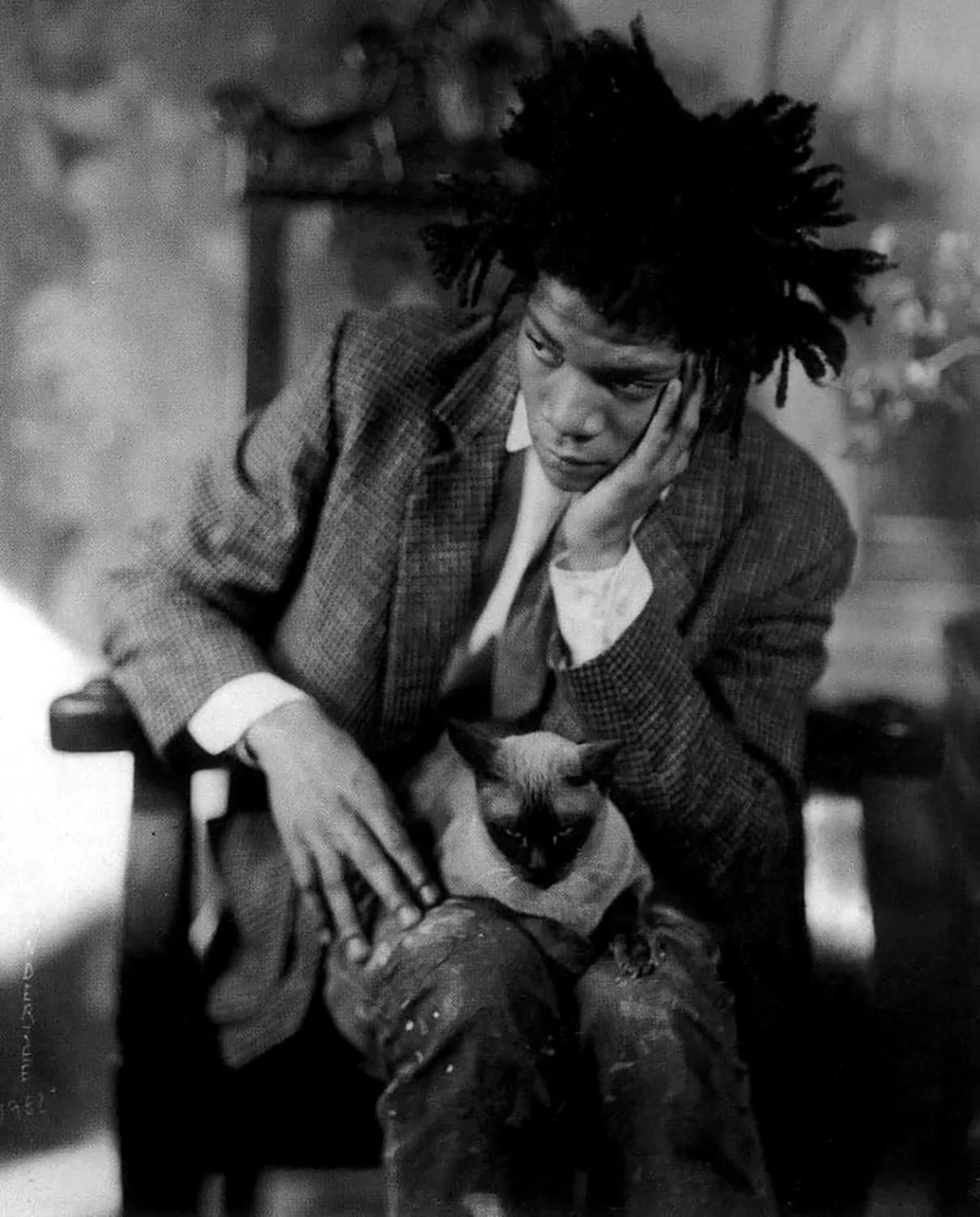
Basquiat and his Siamese cat
There’s something undeniably magnetic about the bond between artists and their cats. Perhaps it begins with something simple and biological: stroking an animal releases oxytocin while lowering cortisol, the stress hormone. Artists are often portrayed—fairly or not—as sensitive or emotionally overloaded people, so maybe we gravitate toward animals for their calming presence. But I think the connection goes deeper than that.
Even artists who grew up with dogs often feel an instinctive pull toward cats. Domestic cats remain closer to their wild ancestors than dogs do; that wildness seems to have stayed with them. Even the most affectionate house cat will still stalk shadows, hunt imaginary prey, and quietly patrol its territory. Dogs evolved alongside humans as collaborators—loyal companions who helped us survive. Cats, however, have always carried a more symbolic role. If the dog nourished the practical side of human life, the cat seems to feed something more spiritual.
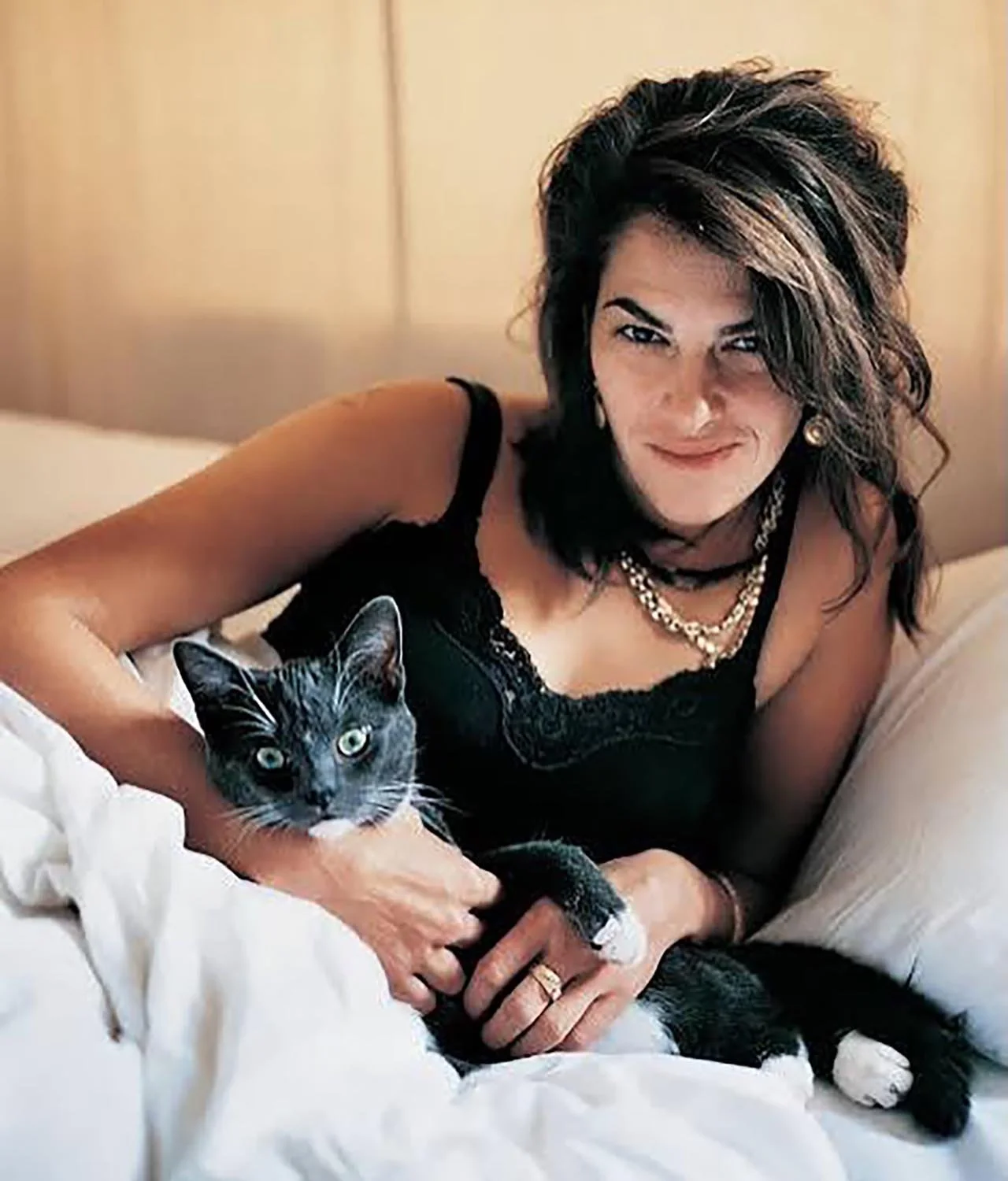
Tracy Emin and her cat, ‘Pancake’
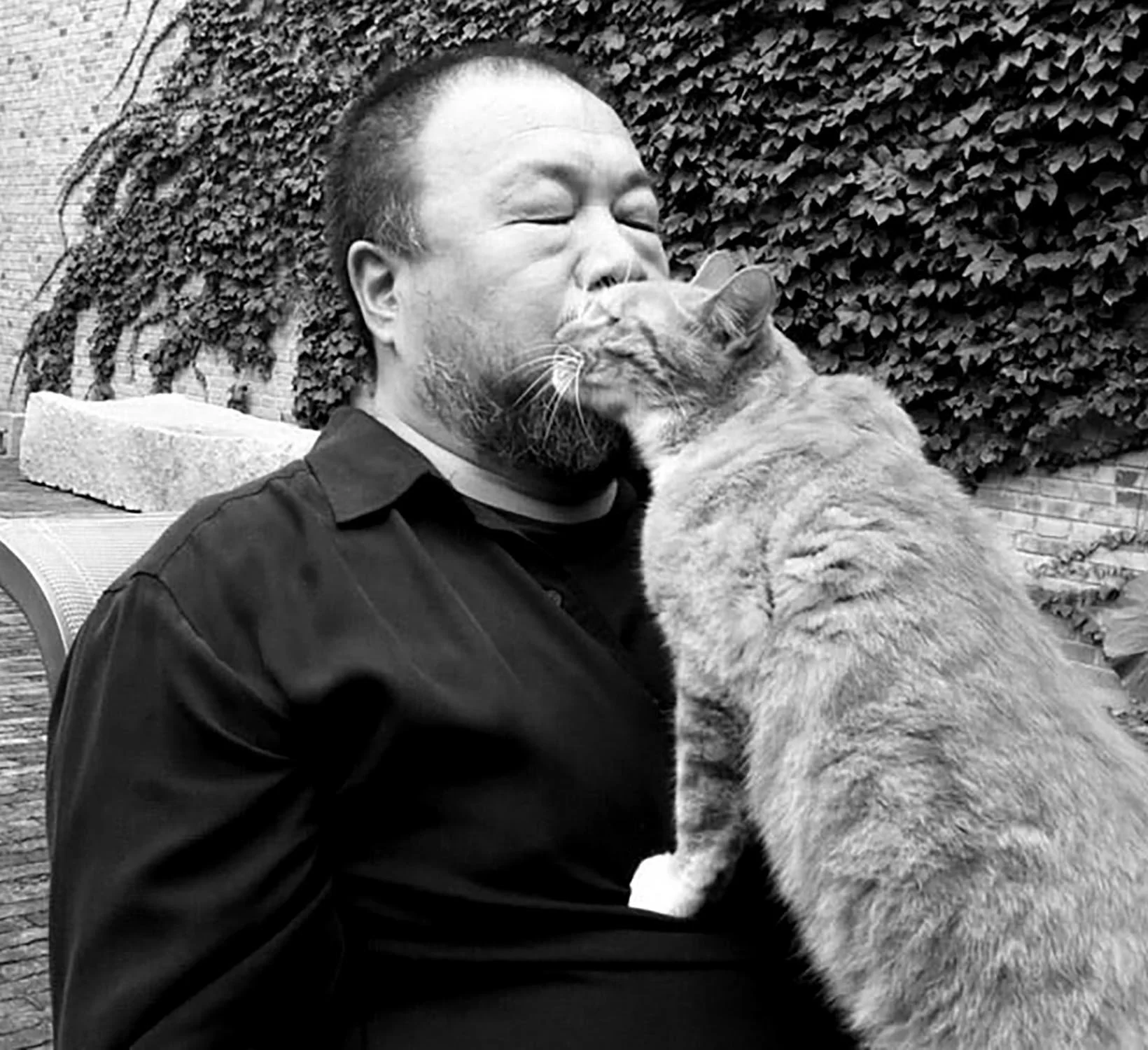
Ai WeiWei with one of his many cats
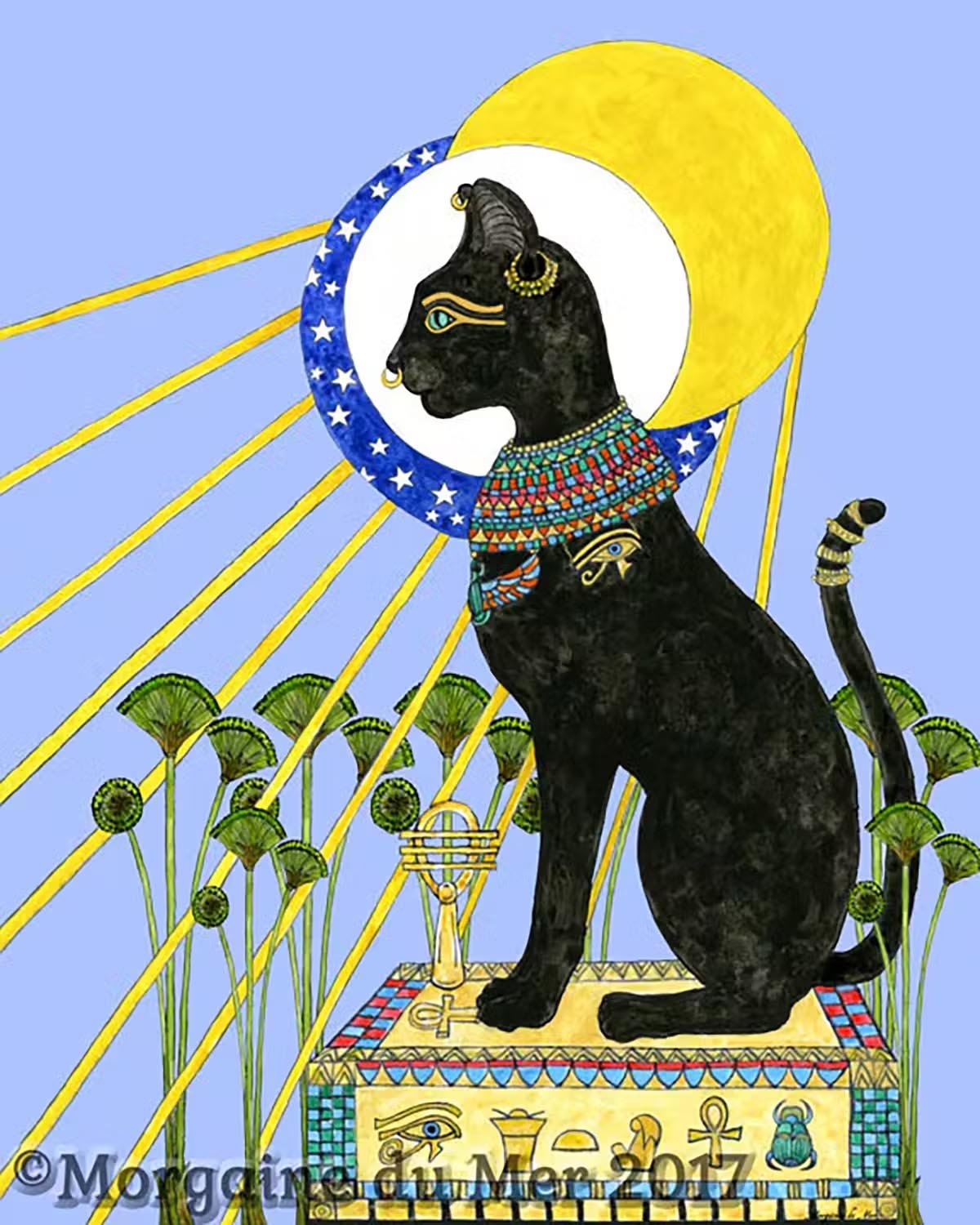
Bastet - Egyptian Goddess
Artists tend not to shy away from the mysterious or the unseen, and cats have long carried an extraordinary weight of symbolism. In ancient Egypt they were sacred, associated with goddesses such as Bastet and Isis and revered as protectors of the home. In Japan they are symbols of luck; in China they have links with fertility. In Norse mythology, the goddess Freyja rode in a chariot pulled by cats. Across cultures, cats have embodied a fascinating duality: affection and independence, intimacy and wildness.
They’ve also long been associated with femininity. Cats seem to embody qualities often linked to feminine archetypes—mystery, independence, and a take-me-as-I-am spirit. Perhaps part of us longs to embody that too: to relax more, to trust our instincts, to be a little wilder.
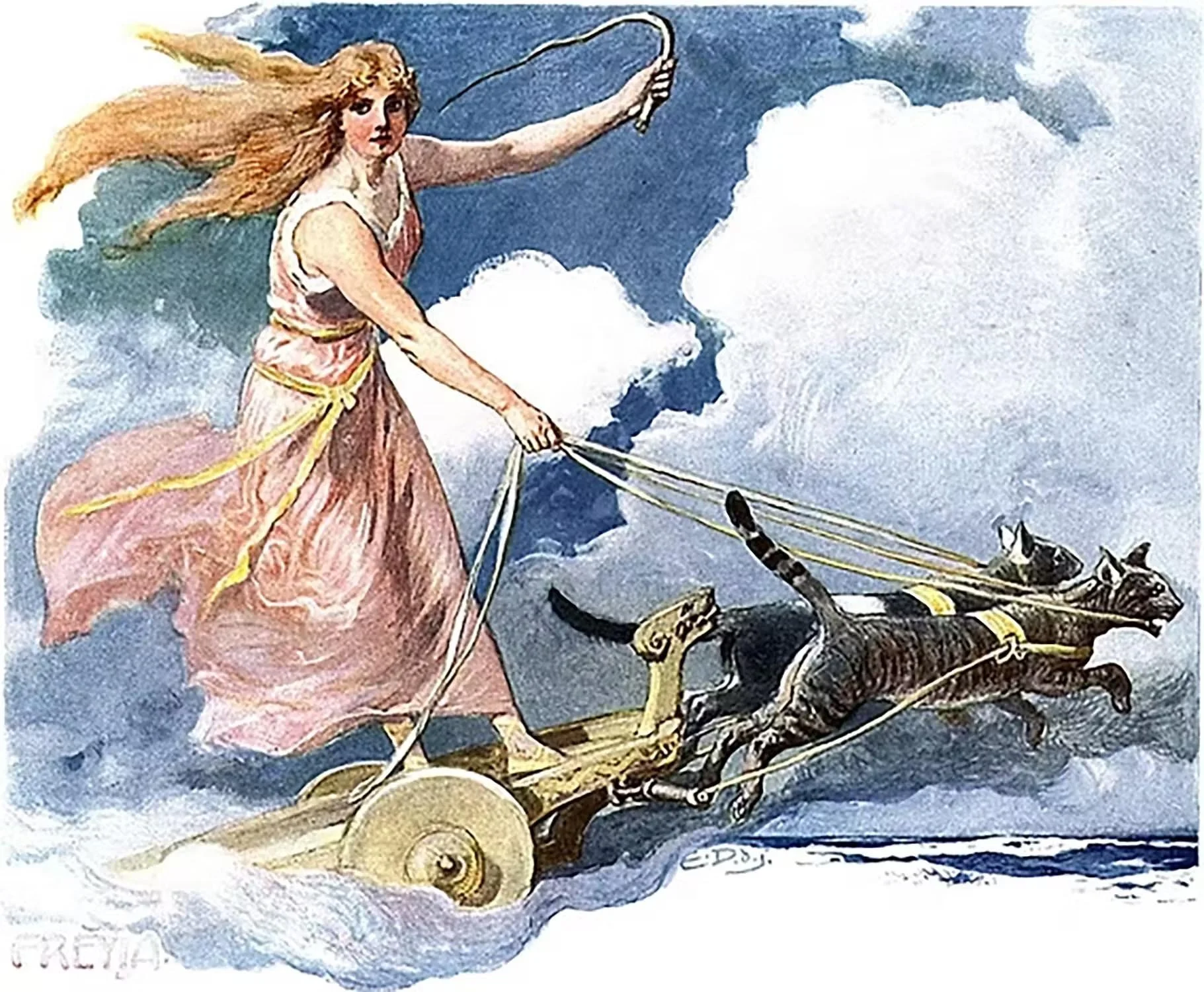
Freyja and her chariot of cats.
In literature, cats often signal the uncanny. As soon as a cat enters a story, you sense something strange might follow. Think of The Master and Margarita, the mysterious feline presences in Kafka on the Shore, or the quiet, transformative role of Chibi in The Guest Cat. Cats in stories rarely feel like ordinary animals—they feel like portals.
Of course, symbolism hasn’t always been positive. In medieval Europe cats—especially black cats—were demonised and associated with witchcraft. Yet in other traditions they were admired. In Islam, for example, cats were respected for their cleanliness and welcomed into homes and mosques.

‘Behemoth’ A central demonic cat character
Kafka on the Shore
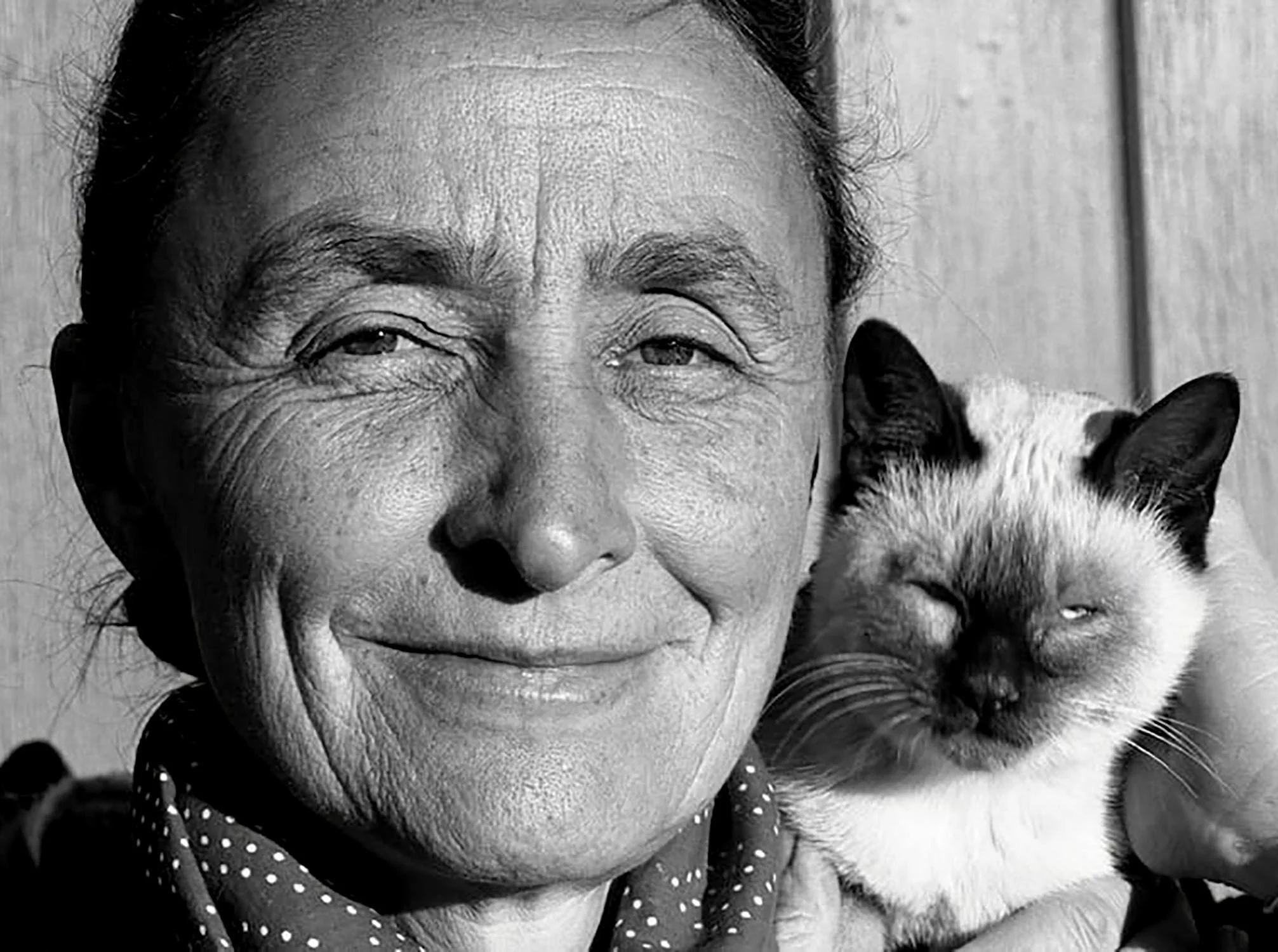
Georgia O’Keeffee and her cat, ‘Jinx’
Artists are always searching for connections across time—between past, present and future—and cats arrive already carrying centuries of meaning. They carry a depth we can feel. Even many of my dog‑loving friends have slowly become cat people, sometimes begrudgingly, sometimes with great surprise. I’m sure the reverse happens too, though I admit: for me, a factor is the smell. Dogs smell. Cats, somehow, smell wonderful. It’s a sensory thing.
Statistically, dogs are more popular than cats. People spend more money on them, feel more emotionally satisfied by them, and studies show a consistent preference for dogs across many countries. Dogs give an immediate emotional payoff; their affection is open, uncomplicated. They’re extensions of ourselves. But maybe that’s the point. Cat lovers seem to want something different—something that teaches us, challenges us, expands us. We let cats remain wild, mysterious, themselves. Their love isn’t automatic. It’s earned. It grows slowly, subtly, with patience and attention—like any deep relationship, any meaningful creative practice. Dogs give us what we ask for; cats make us listen. Maybe that’s why artists keep seeking them out.
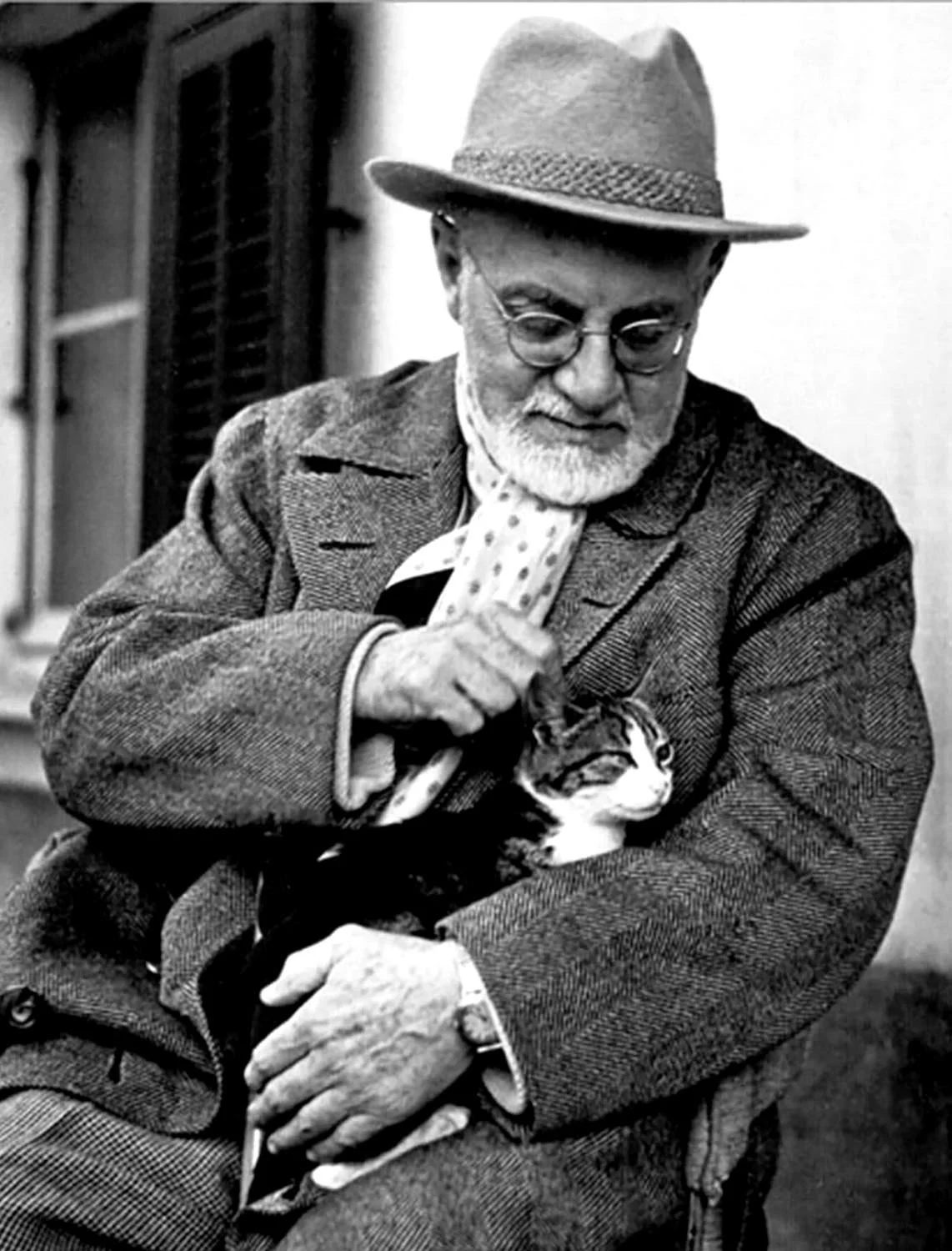
Matisse and his cat, ‘Coussi’
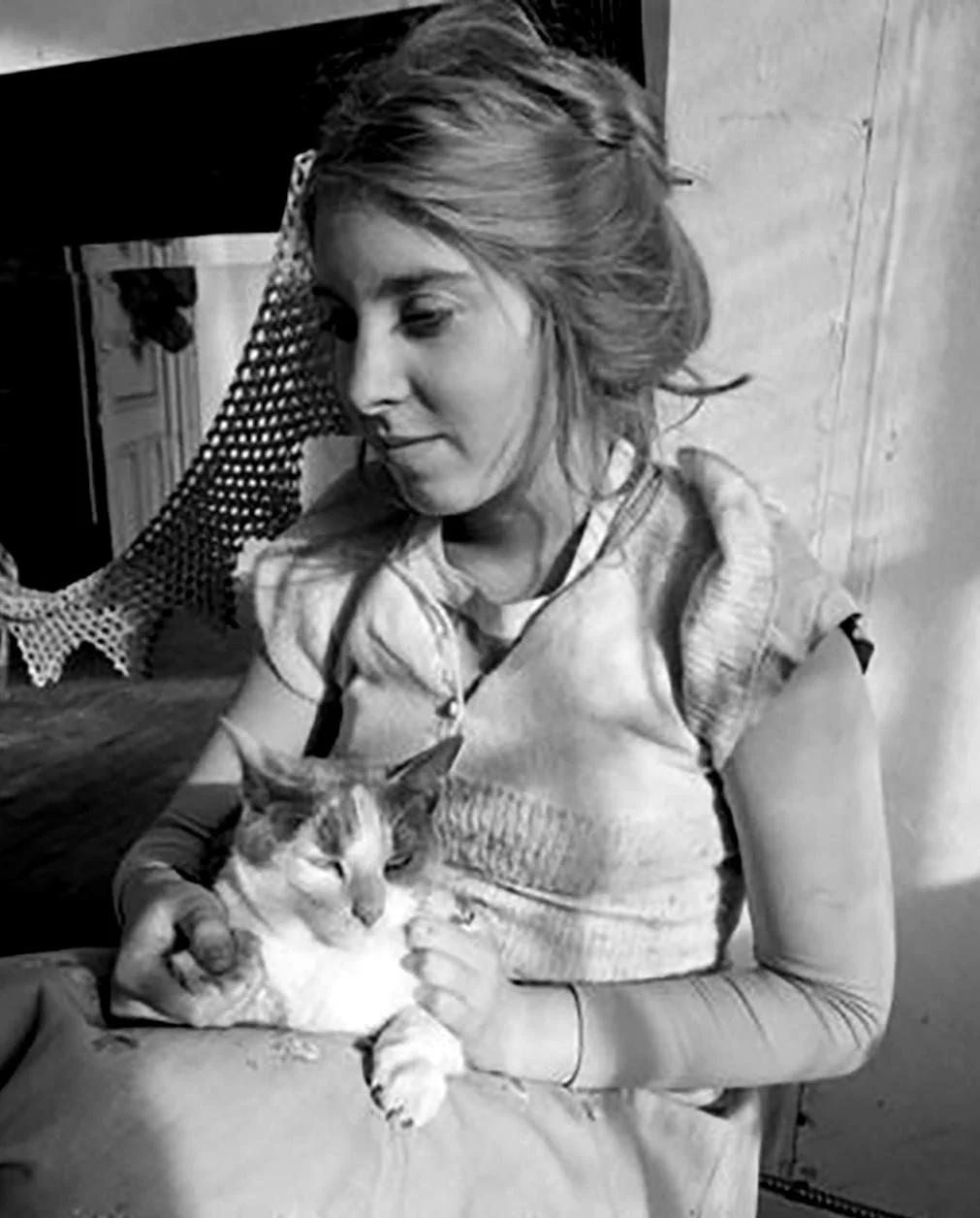
Francesca and her cat, ‘Charlie’.
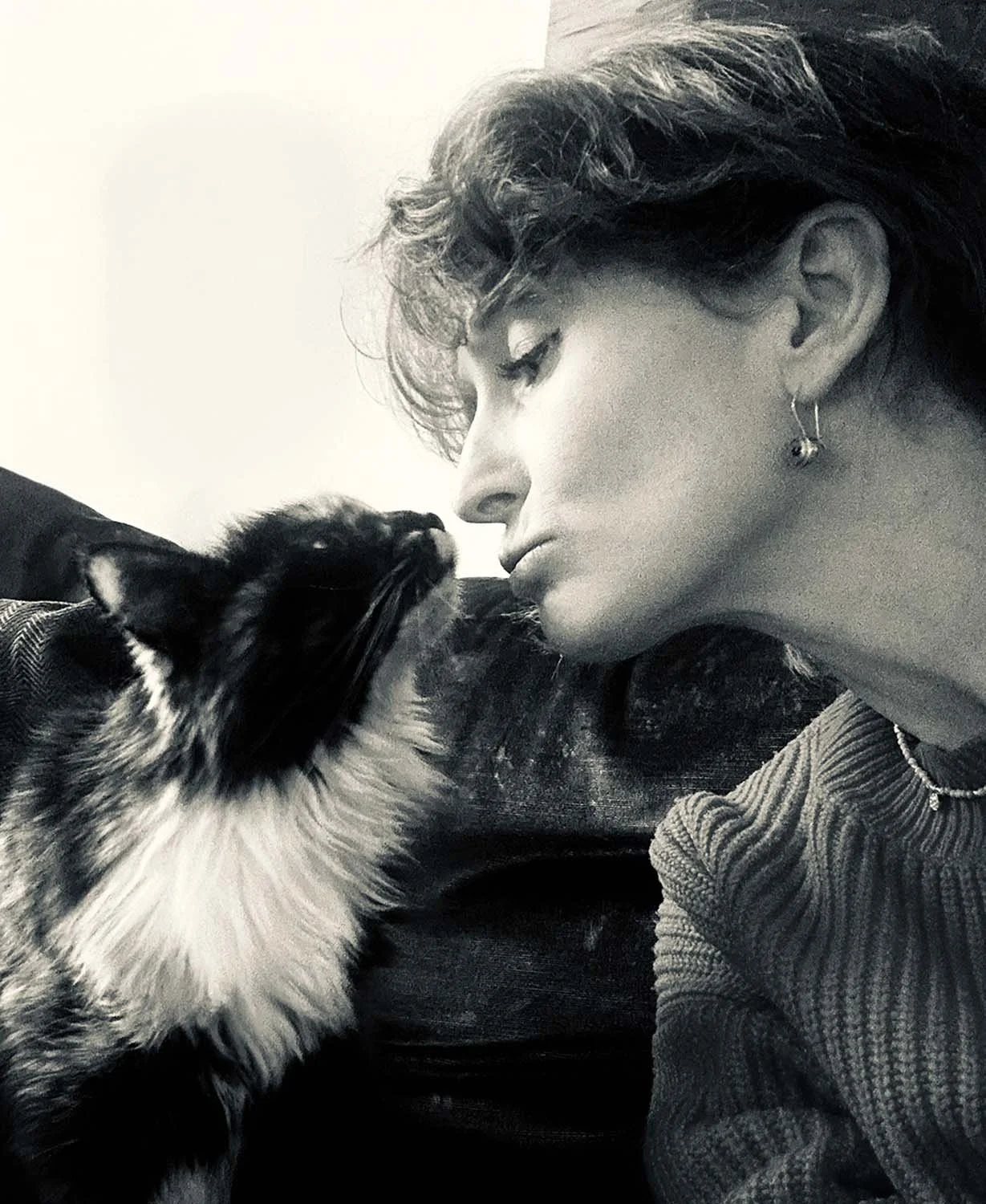
Me, with my cat ‘Shakira’, 2026
I recently had to put my cat down and I feel such grief not just because I can’t be with her physically but because she grounded me to the real fundamentals of life, she put me in the moment and took away my worries while I was with her - it was like she was a conduit to the source of life, because she embodied so many myths and held a deep mystery.
Cats often find their way into my work—they’ve always felt like an endless source of meaning and inspiration.
RIP Shakira (2014–2026).

A Cat and a Cup Of Tea - Alice Boyle - 2022
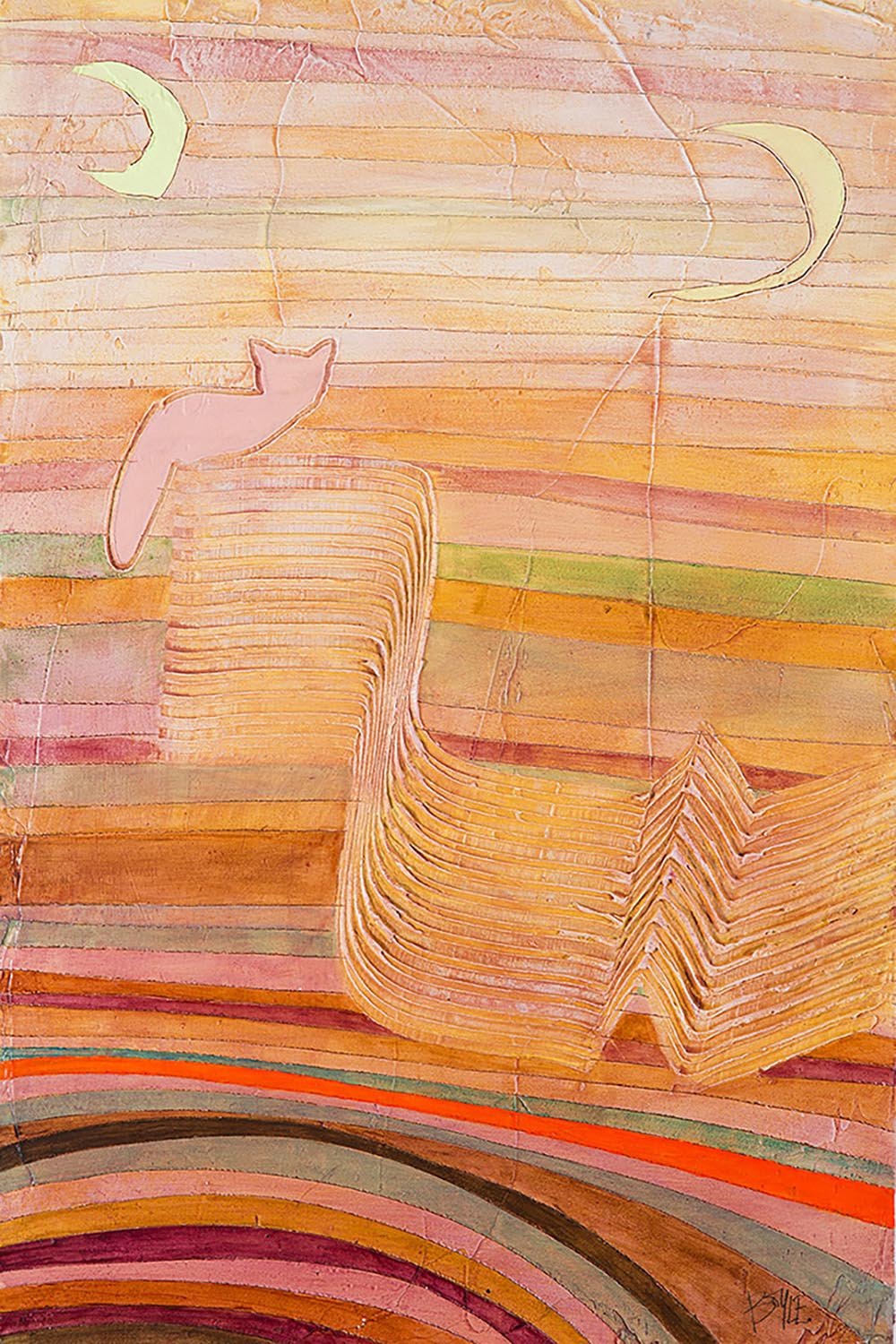
Counting Moons - Alice Boyle - 2016

Oblivious - Alice Boyle - 2014
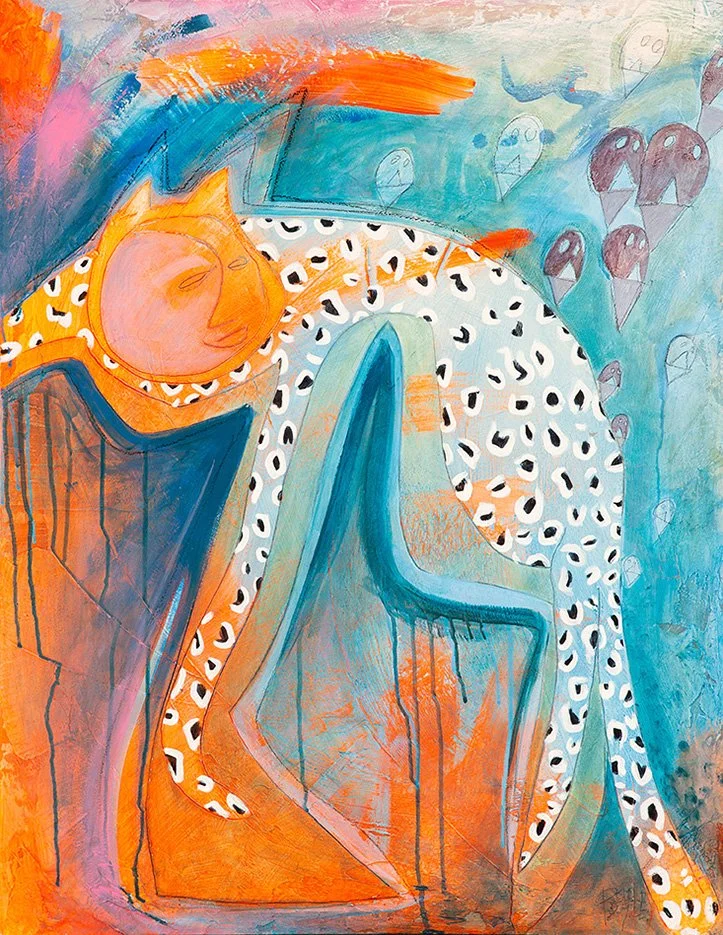
Give Me Peace - Alice Boyle - 2022